
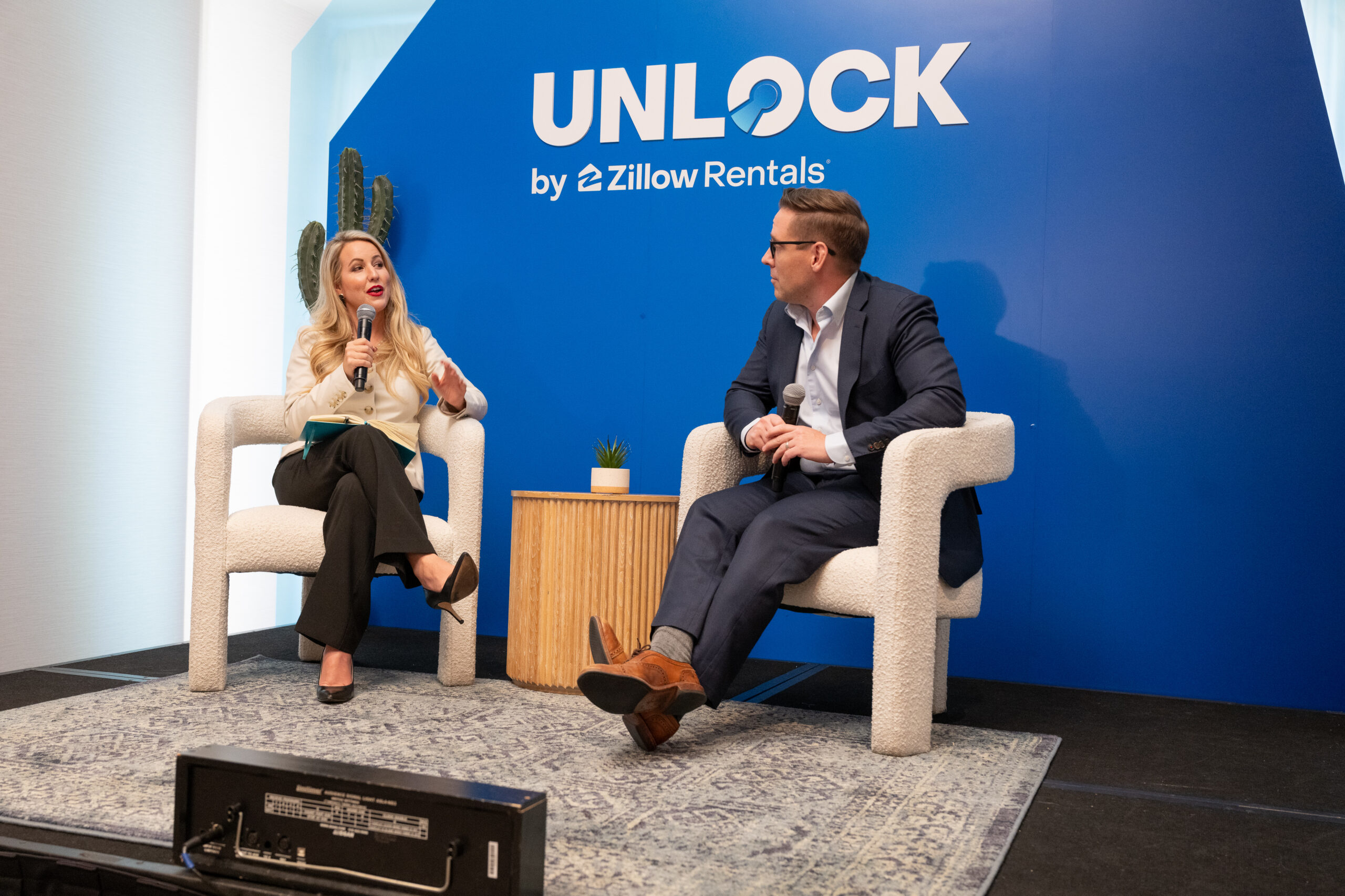
 CEO Jackie Ware leads Pegasus Residential, a third-party operator in Sun Belt markets under pressure from a surge in new supply. Mischa Fisher is Zillow‘s chief economist, where he tracks the data behind those markets. Put them at one table, and the conversation answers a question operators face every month: what do I tell the owner?
They recorded On Air with Jackie Ware live at the 2026 Unlock Conference in Scottsdale.
Which signal deserves attention? Ware opened by asking what operators and owners should watch. Fisher gave an unconventional answer. Watch inflation. It is not behaving as forecasters expected, and he said vacancy, construction, and cap rates all sit downstream of it. CPI predicts PCE well, and PCE is the Federal Reserve’s target. Ware called it a tip worth passing to everyone.
Where does the national story fail? Ware asked how the economic narrative differs from the property level. Fisher said supply. Some Sun Belt metros should see about 30 percent fewer completions in 2027 than this year, while others will see about 10 percent more. For scale, take a metro that delivered 10,000 units this year (an illustration, not Fisher’s figure). Down 30 percent is 7,000. Up 10 percent is 11,000. Ware said her team lives with that pressure and asked when it eases. Fisher said Phoenix is already falling and Dallas should climb, so operators need to check their own metro and confirm that started projects get finished.
What does the owner need to hear? Ware raised the conversation she dreads. As a third-party operator, her team must bring evidence to clients, and telling an owner that rents are down and marketing spend must rise is hard. Fisher said the macro environment is the challenge, not the operator, and Ware asked him to say it again. Fisher added that owners still want proof the operator is working the problem. Zillow publishes its research free at zillow.com/research, and Ware said her team will present that data alongside its other sources.
How should operators price and sell? Fisher said real incomes are shrinking, so residents want both budget and value. Ware asked whether that belongs in the sales process as two buckets. Fisher said yes, and added that operators should do the math for residents because many act on instinct. On pricing, he said to lean on concessions where rents are turning up and on rate where they still fall. He also said to judge lead sources by long term results, not volume.
Who is the renter? Fisher said the typical renter is around 40, often has kids, and is almost ten years older than a decade ago. He called customer service an amenity, because residents want a human they trust.
What happens to marketing? Ware said she sees marketing swing in different directions and expects big shifts over the next 18 to 24 months. She admitted she has tried to predict where search goes and cannot. Fisher said the same. He did say shoppers who ask AI tools detailed questions tend to be stronger demand, and that incomplete listings drop out of those answers.
What should an operator do first? Ware asked what Fisher would prioritize if he owned a portfolio. He said to know the return on each marketing channel, so spend can move when the macro picture changes. Ware condensed it to three words: plan for surprises.
This week, pull the Zillow rental demand index for your metro and list the return on each lead channel beside it. Put both on one page, and bring that page to your next owner call.